
“The environments we create determine the behaviours we see.”
“The ground dimensions influence behaviour before the game even starts.”
These two philosophies previously taught me that I was not designing practice with enough detail.
If space influences behaviour in training, why would we expect competition to be any different?
Australian Football provides a unique example because every venue has different dimensions. During previous AFL and VFL ground analysis projects, I compared venues against the MCG and quickly realised just how different the environments were. Frankston’s Kinetic Stadium measured approximately 185m x 110m, making it one of the longest and narrowest grounds in Victorian football. In comparison, Box Hill City Oval measured approximately 169m x 151m, creating a vastly different playing environment despite both venues hosting the same sport.
Before the opening bounce has even occurred, both venues present players and coaches with different opportunities and different problems.
A long, narrow ground may encourage teams to lengthen the game, move the ball quickly down the line and focus on territory. It can create more opportunities for forward handball chains while making it more difficult to switch the ball because the width simply is not available. Defences can squeeze the corridor and force teams into predictable ball movement patterns.
A wider ground creates entirely different opportunities. Teams have more room to switch play, spread defensive strategies, kick to advantage and generate overlap through uncontested possession. The additional width creates more opportunities to expose defensive systems and utilise the open side of the ground.
The important lesson is simple:
The ground dimensions themselves influence behaviour before the game even starts.
Teams regularly adjust their strategy based on the dimensions of the venue they are playing on. Training design works exactly the same way. When coaches manipulate the dimensions of an activity, they are changing the opportunities and problems that players encounter. The behaviour changes because the environment changes.
If AFL and VFL clubs adjust their strategy based on the dimensions of the ground, why wouldn’t coaches adjust their activities based on the dimensions of the learning environment?
Space Is More Than Size
Many coaches think about space only in terms of making an activity bigger or smaller. However, space is much more than size. Coaches can manipulate learning through the size of the area, the shape of the area, the density of players, player numbers, markings and zones.
Importantly, these are all separate variables. A coach can keep the playing area exactly the same while changing player numbers. They can keep the numbers the same while altering the shape. They can keep both unchanged and simply introduce zones, scoring areas or restricted spaces. Each change influences behaviour in a different way.
Most coaches think they are changing an activity. What they are actually changing is the problem players must solve. When a coach reduces the space, they are not just making the activity smaller. They are increasing pressure, reducing options and changing the decisions players need to make. When a coach increases the space, they are not just making the activity bigger. They are creating more time, more movement options and different tactical possibilities.
This is why activity design matters. The environment shapes the problem, and the problem shapes the behaviour.
The question is not:
“How big should the activity be?”
The better question is:
“What behaviours am I trying to create?”
How Different Spaces Create Different Behaviours
There are five key ways coaches can manipulate an activity without necessarily changing the activity itself.
The first is size. Smaller spaces generally increase pressure, contested possessions, physical contact, transition moments and decision-making speed. Larger spaces generally increase time, running, kicking, overlap opportunities, uncontested possession and ball movement.
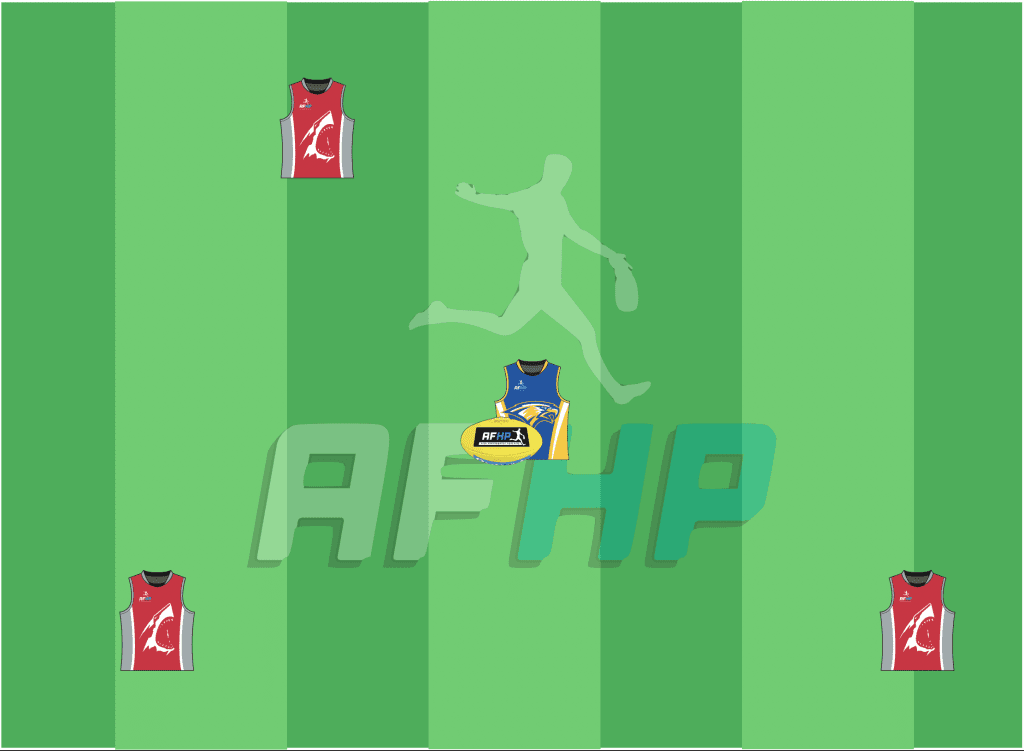
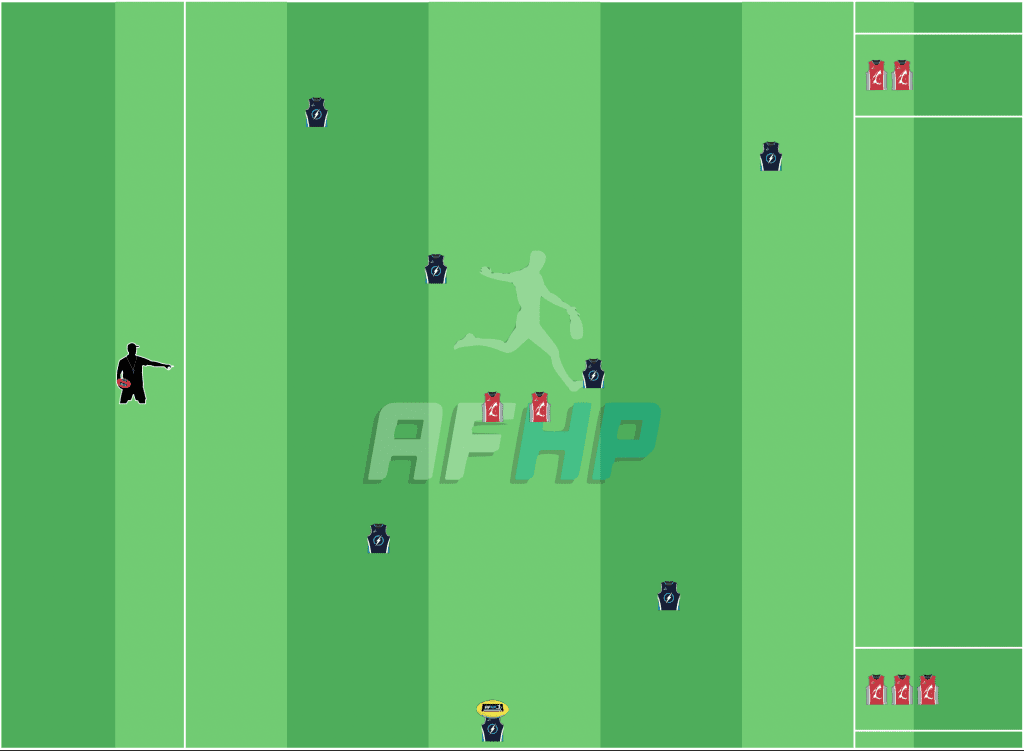
The second is shape. A square often encourages ball retention, support play and shorter passing options. A rectangle tends to promote direct ball movement, territory gain, surge football and end-to-end transition. An oval creates greater switching opportunities, wider ball movement, more realistic football positioning and shots from a variety of angles.
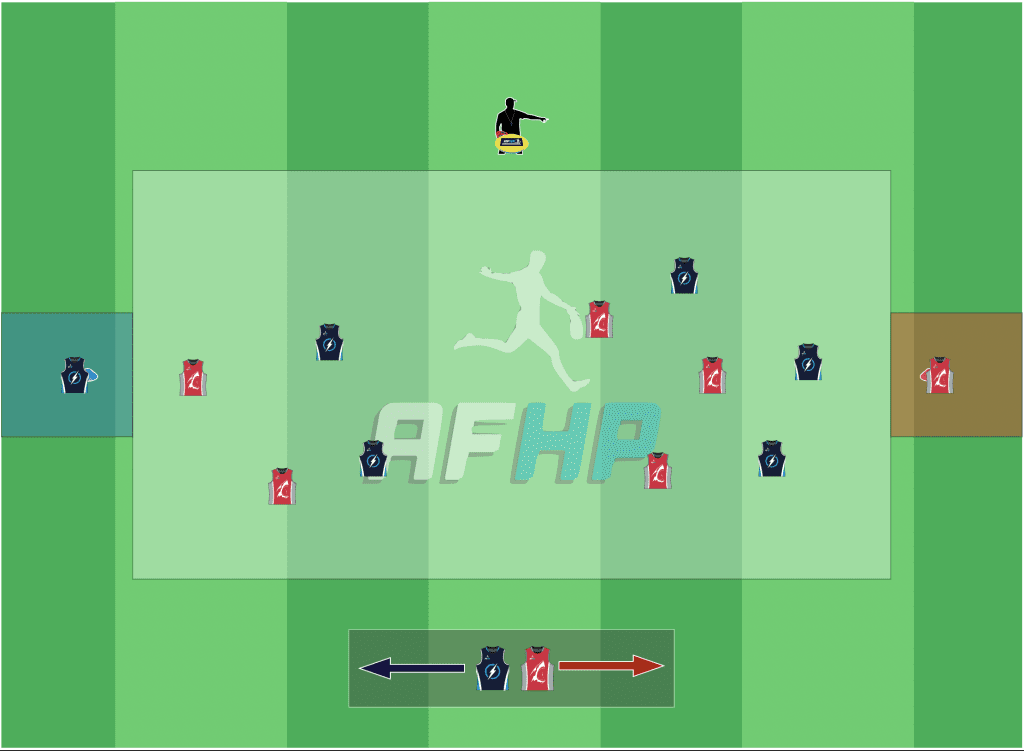
The third is density. Density refers to the amount of space available per player. Two activities may use exactly the same dimensions and yet produce completely different behaviours because the number of players changes the environment. Higher-density activities generally create more pressure, more contests, faster decisions and less available space. Lower-density activities generally create more time, more running opportunities, more kicking opportunities and greater freedom of movement.
The fourth is numbers. By simply adding or removing players, coaches can change the opportunities, decisions and pressures within an activity. Even-numbered activities often create balanced challenges where players must work to create advantages through movement and decision-making. Overloaded activities can help players experience success, identify solutions and explore tactical concepts with more time and support. Underloaded activities challenge players to defend space, compete under pressure and solve more difficult football problems.
The fifth is markings and zones. Coaches can change the learning environment by adding corridors, wide channels, scoring zones, protected areas, launch zones or restricted spaces. These markings influence where players move, where they look, what they value and what decisions they make. Often the environment can teach the behaviour before the coach says a word.
Coaches Need To Know Who The Activity Is Favouring
Coaches need to understand who the activity is favouring.
A smaller space will often favour the defence because there is less room for the attacking team to exploit, fewer passing lanes to access and less time to make decisions. With less space available, defenders can more easily take away time and space from the offence. Passing lanes become smaller, options become limited and pressure arrives faster.
As a result, smaller spaces often create more contested possessions, more tackles, more pressure acts and more transition opportunities. This makes smaller spaces particularly useful for developing contest craft, defensive pressure, tackling, evasion, overlap support, handover behaviours and fast ball movement under pressure.
For attacking players, success in smaller spaces often comes through the ability to break tackles, evade pressure, draw defenders and create overlap opportunities.
A larger space will often favour the attack because there is more room to pass to advantage, spread the defence, create overlap and use running power. Additional space provides more opportunities to switch play, run with the ball and generate uncontested possession. With greater time and space available, attacking teams are often able to manipulate defenders more effectively and expose weaknesses in defensive structures.
This does not mean one space is better than another. It simply means coaches need to understand what the environment is rewarding and whether that aligns with the behaviour they are trying to develop.
Overloads need to created, not just a given
It is easy to give the offence an outnumber in training. This can be useful, particularly when players are learning a new concept or need more time and support to experience success. However, game day does not always provide obvious numerical advantages.
Players must also learn how to create, earn and manufacture overloads through movement, work rate, positioning and decision-making. The best attacking teams do not simply wait for outnumbers to appear. They recognise where the advantage can be created and then work together to exploit it.
One useful coaching principle is that if the game is played with even numbers, teams should be looking to create overloads somewhere else on the ground. This may occur through hard running, splitting defenders, kicking to advantage, owning the outside or recognising patterns before the opposition does.
Creating and exploiting these advantages is one of the most important attacking principles in football.
Density, Numbers And Progressions
One of the most overlooked coaching tools is density. Density refers to the amount of space available per player. Two activities may use exactly the same dimensions and yet produce completely different behaviours because the number of players changes the environment.
Higher-density activities generally create more pressure, more contests, faster decisions and less available space. Lower-density activities generally create more time, more running opportunities, more kicking opportunities and greater freedom of movement. This means coaches can significantly alter the learning environment without moving a single cone.
The same principle applies to player numbers. By simply adding or removing players, coaches can change the opportunities, decisions and pressures within an activity. Even-numbered activities often create balanced challenges where players must work to create advantages through movement and decision-making. Overloaded activities can help players experience success, identify solutions and explore tactical concepts with more time and support. Underloaded activities challenge players to defend space, compete under pressure and solve more difficult football problems.
This becomes particularly useful when progressing or regressing activities. With younger or developing groups, it is often useful to begin with larger spaces, additional time and numerical advantages. This allows players to experience success while understanding the objectives of the activity. As learning develops, coaches can progressively manipulate constraints by reducing space, removing outnumbers, increasing pressure, altering density, changing starting positions or introducing zones.
These adjustments allow coaches to continually challenge players without completely changing the activity.
Space is also an important session management tool. Coaches often spend significant amounts of time moving cones, reorganising groups and resetting activities. Sometimes the most effective solution is not creating an entirely new activity. It may simply be adjusting player numbers, modifying rules or making small changes to the existing space.
Maintaining a similar setup across multiple progressions can improve session flow, maximise active learning time and reduce unnecessary interruptions. Manipulating density and numbers is one of the easiest ways to progress or regress an activity while maintaining session flow.
Using Space As A Coaching Tool
One of the most practical uses of space is as a progression or regression tool.
With younger or developing groups, it is often useful to begin with larger spaces, additional time and numerical advantages. This allows players to experience success while understanding the objectives of the activity. As learning develops, coaches can progressively manipulate constraints by reducing space, removing outnumbers, increasing pressure, altering density, changing starting positions or introducing zones.
These adjustments allow coaches to continually challenge players without completely changing the activity.
Space is also an important session management tool. Coaches often spend significant amounts of time moving cones, reorganising groups and resetting activities. Sometimes the most effective solution is not creating an entirely new activity. It may simply be adjusting player numbers, modifying rules or making small changes to the existing space. Maintaining a similar setup across multiple progressions can improve session flow, maximise active learning time and reduce unnecessary interruptions.
Every Change Creates A Consequence
If you change something somewhere, it will always affect something somewhere else.
This is one of the most important principles of activity design. Every constraint interacts with other constraints, which means there is no isolated adjustment. Changing the space, numbers, rules, scoring system, starting positions or zones will always shift the problems players are solving.
Sometimes that change will progress the activity. Sometimes it will regress it. Sometimes it will create an unintended behaviour the coach did not plan for.
Every modification influences the decisions, behaviours and outcomes that emerge. As coaches, our role is not simply to change constraints. Our role is to understand the consequences of those changes and ensure they align with the learning outcomes we are trying to achieve.
Space is not just a way of organising players. It is one of the most powerful tools we have for shaping behaviour, because the environments we create ultimately determine the behaviours we see.